
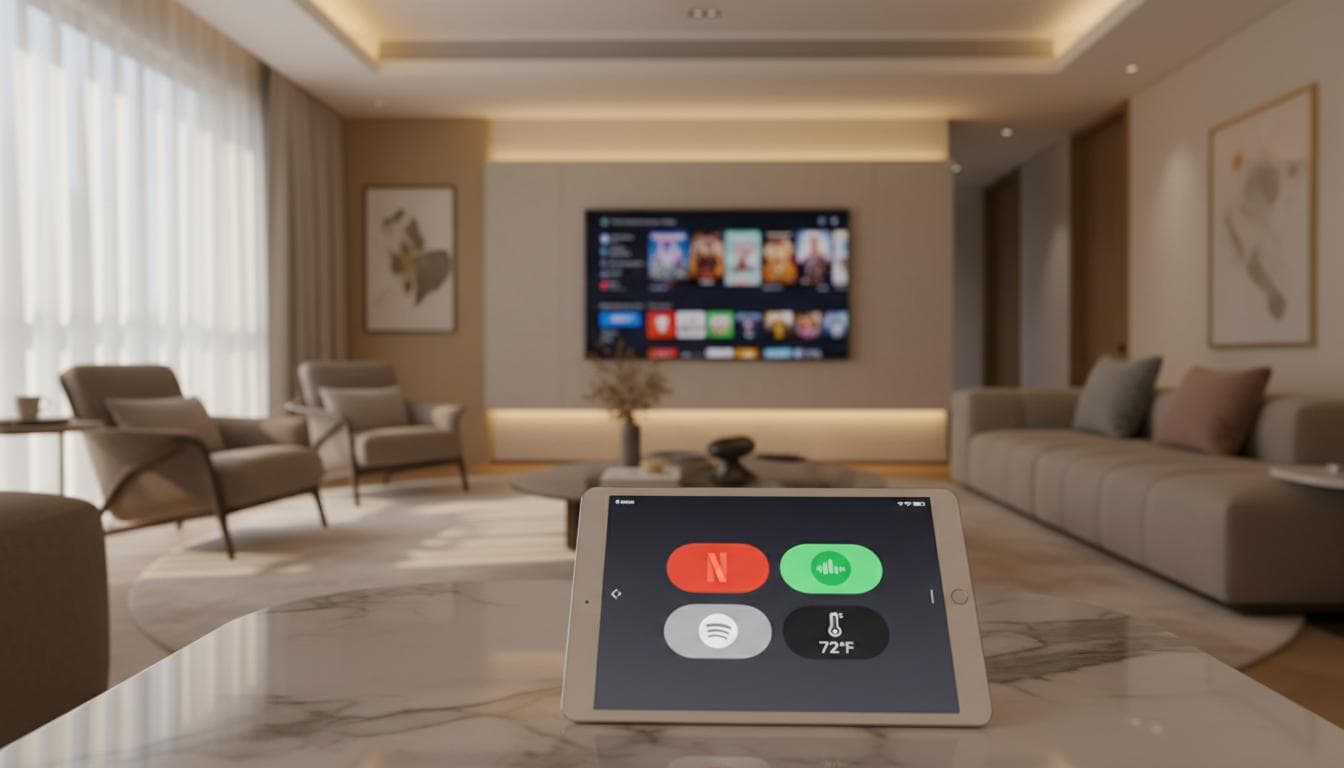
Mounted level, wired out of sight, working when we leave
Residential TV mounting across Calgary — the right mount for the wall, the cabling concealed, the equipment behind it sorted out, and the room genuinely simple to use afterward.
What's involved
The screen is the easy part
Getting a television onto a wall takes an hour. What takes judgement is everything around it — what's behind the drywall, where the power and HDMI are going to run, how high the screen should sit for the seating you actually have, and what happens to the pile of boxes and cables underneath. That's the part we're being hired for.
- The mount matched to the television and to what's actually behind the wall
- Power and HDMI concealed so nothing hangs below the screen
- Samsung Frame installations sat flush, with the box and cabling planned in
- Fireplace and media-wall installs worked out before anything gets cut
- Existing equipment relocated, tidied and reconnected
- Sources, apps and remotes set up and handed over working
Where it goes further
One screen,or the whole room.
Plenty of jobs are exactly what they sound like: mount the television, hide the wiring, tidy the equipment, done. We're happy to do that and leave it there.
Often though, the TV is the thing that finally exposes something else. If the room deserves proper picture and sound, that becomes a home theatre or media room conversation. If you want music in the rooms either side of it, that's whole-home audio. If the streaming buffers every evening, the honest answer is usually the network rather than the television.
And when there are three remotes on the coffee table and nobody else in the house can turn it on, URC Total Control turns the whole thing into one press. None of that has to happen now — but it's worth knowing which of it you might want later, because it changes what we run inside the wall today.
TV mounting — FAQs
Common questions about mounting, wiring and setting up a television.
In most walls, yes — power and HDMI can run inside the wall so there's nothing visible below the screen. Where the wall construction makes that impractical, we'll tell you before we start and go through the tidiest alternative rather than improvising on the day.
Often, but it's worth a conversation first. Above a fireplace usually means a higher screen than is comfortable to watch for a whole evening, and some fireplaces put real heat where the equipment would sit. We'll look at the wall, the mantel height and how the room is used, and tell you honestly whether it's the right spot or whether somewhere else in the room would serve you better.
We'll specify the mount that suits the television, the viewing position and the wall it's going on — fixed, tilting or full-motion — and supply it as part of the work. If you've already bought one, we'll tell you whether it's right for the job before we put holes in anything.
Yes. The Frame is worth doing properly: a recessed box so the screen sits flush to the wall, and the One Connect box and cabling planned into the install rather than left dangling. Done right it reads as artwork on the wall rather than as a television.
Flat-panel televisions have very little room for speakers, and it shows on dialogue. Depending on the room we'll suggest a soundbar or a proper speaker layout — that's a conversation about the room, not an upsell, and we're happy to mount the TV and leave the sound for later.
That's a large part of what we get called for. Streaming boxes, a receiver, a games console and a modem stacked on a shelf with a nest of cables behind them can usually be relocated, consolidated and labelled — sometimes into a cabinet or a rack, sometimes just organised properly where they are.
Yes — multiple rooms in one visit is common, and it's usually the point at which it's worth thinking about how the rooms relate to each other rather than treating each screen as a separate job.
Got a TV that needs putting up properly?
Tell us the room, the television and what's going underneath it, and we'll take it from there.